A small business website has roughly five seconds to make its case. Not to impress a designer. Not to win an award. To convince a real buyer that this business is credible, relevant, and worth contacting. That is the moment where custom website design for small business changes the outcome and where generic templates consistently fall short.
Too many businesses still rely on off-the-shelf solutions that look acceptable at first glance but fall apart under pressure. They load slowly, bury key services, create SEO limitations, and make every competitor look interchangeable. For a business owner trying to generate leads, book consultations, or sell products, that is not a design problem. It is a growth problem.
In the projects we take on, the pattern is consistent. The business is capable, the offer is strong, but the website communicates none of it clearly. A custom build is how that gap gets closed not just visually, but structurally and strategically.
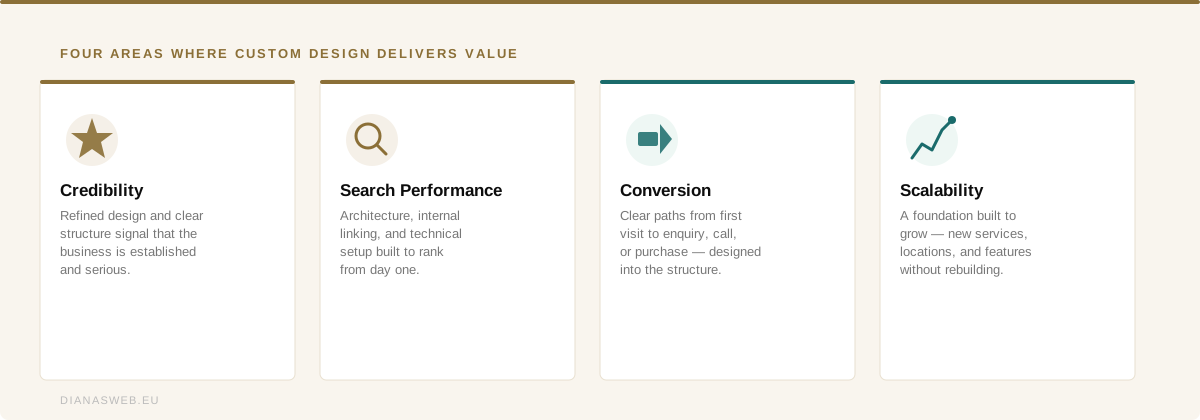 Credibility and first impression. Buyers notice when a business presents itself with clarity and authority. A refined design, strong messaging, and a well-structured site signal that the company is established and serious about what it does. That perception is formed in seconds and is very difficult to recover once lost.
Search performance and visibility. SEO is not simply about publishing content or placing keywords. It depends on technical setup, page structure, internal linking, load speed, metadata, and how accurately the site reflects real user intent. A custom build creates the conditions for strong search performance from the start rather than trying to retrofit optimisation into a template that was not designed for it.
Conversion and lead generation. A website should guide visitors toward action whether that is a consultation request, a phone call, a quote form, or a purchase. Custom design makes those paths clear, logical, and easy to complete. In our experience, improving the conversion architecture of a site consistently produces more leads without requiring any increase in traffic.
Scalability and long-term growth. Template sites become restrictive once a business expands its services, enters new markets, or needs advanced functionality. A custom foundation is built to accommodate growth new pages, new locations, new integrations without requiring a full rebuild every few years.
Credibility and first impression. Buyers notice when a business presents itself with clarity and authority. A refined design, strong messaging, and a well-structured site signal that the company is established and serious about what it does. That perception is formed in seconds and is very difficult to recover once lost.
Search performance and visibility. SEO is not simply about publishing content or placing keywords. It depends on technical setup, page structure, internal linking, load speed, metadata, and how accurately the site reflects real user intent. A custom build creates the conditions for strong search performance from the start rather than trying to retrofit optimisation into a template that was not designed for it.
Conversion and lead generation. A website should guide visitors toward action whether that is a consultation request, a phone call, a quote form, or a purchase. Custom design makes those paths clear, logical, and easy to complete. In our experience, improving the conversion architecture of a site consistently produces more leads without requiring any increase in traffic.
Scalability and long-term growth. Template sites become restrictive once a business expands its services, enters new markets, or needs advanced functionality. A custom foundation is built to accommodate growth new pages, new locations, new integrations without requiring a full rebuild every few years.
What is custom website design for small business?
Custom website design for small business is the process of building a website from the ground up around a specific business model, target audience, and growth strategy rather than adapting a pre-built template to fit. It combines strategic planning, SEO architecture, UX design, and technical development into a single coordinated system built to attract the right visitors, communicate credibility, and convert attention into measurable action.
Why Custom Website Design Changes the Outcome
A custom website does more than change the visual presentation of a brand. It creates a digital system that supports visibility, trust, and conversion at the same time. That only happens when design decisions are tied directly to business goals rather than borrowed from a template built for someone else’s industry. For a law firm, that may mean a structure that builds authority and makes practice areas easy to navigate. For a contractor, it may mean local landing pages, project galleries, and quote request flows that reduce friction. For an e-commerce brand, it may mean category organization, mobile performance, and a checkout experience designed to reduce abandonment. The design should fit the business model not force the business into a layout designed for the average of everything. This is where many small businesses lose momentum. They invest in something that looks modern but has no strategic foundation. The homepage is polished, yet the content hierarchy is weak. The visuals are strong, but the user journey is unclear. The site exists, but it does not support ranking, lead generation, or long-term expansion.What Custom Actually Means
Custom does not simply mean choosing different fonts, swapping colors, or adding a unique hero image. A genuinely custom website is planned from the ground up around the business, the market, and the audience it is trying to reach. That process starts with research. Before any layout decisions are made, the business needs a clear picture of its positioning, competitors, ideal customers, search opportunities, and conversion priorities. Without that layer, design becomes guesswork dressed up as creativity. From there, strategy defines the site architecture. Which pages are needed? How should services be grouped? What questions need to be answered early in the visit? Where should trust signals appear? What content supports long-term SEO? How will the site scale when the business adds locations, services, or product lines? Only then does the visual and technical work begin and it performs better because it is built on a foundation that was planned, not assumed.Four Areas Where Custom Design Delivers Business Value
When businesses ask whether a custom build justifies the investment, the honest answer is that it depends entirely on the role the website plays in the business. For companies where the website is expected to generate leads, qualify buyers, or drive revenue, the cost of an underperforming solution shows up quickly. A custom website tends to deliver value across four distinct areas.
Credibility and first impression. Buyers notice when a business presents itself with clarity and authority. A refined design, strong messaging, and a well-structured site signal that the company is established and serious about what it does. That perception is formed in seconds and is very difficult to recover once lost.
Search performance and visibility. SEO is not simply about publishing content or placing keywords. It depends on technical setup, page structure, internal linking, load speed, metadata, and how accurately the site reflects real user intent. A custom build creates the conditions for strong search performance from the start rather than trying to retrofit optimisation into a template that was not designed for it.
Conversion and lead generation. A website should guide visitors toward action whether that is a consultation request, a phone call, a quote form, or a purchase. Custom design makes those paths clear, logical, and easy to complete. In our experience, improving the conversion architecture of a site consistently produces more leads without requiring any increase in traffic.
Scalability and long-term growth. Template sites become restrictive once a business expands its services, enters new markets, or needs advanced functionality. A custom foundation is built to accommodate growth new pages, new locations, new integrations without requiring a full rebuild every few years.
Custom Website Design by Business Type
The principles behind custom design apply across industries, but the priorities shift significantly depending on how a business operates and how its customers search and buy.Local Service Companies and Contractors
For businesses that serve a defined geographic area construction companies, plumbers, landscapers, cleaning services a custom website needs to address both service specificity and location relevance simultaneously. Each core service should have its own dedicated page, and each key service area should have a location page built around real local search intent. One of the most consistent findings in our audits of local service websites is that everything is grouped onto a single services page. The business may operate across multiple cities with five different services, but the website presents it all together. The result is a site that is difficult for search engines to interpret and difficult for the right visitor to navigate quickly. Separating those combinations into focused pages is often the single structural change that produces the most immediate ranking progress.Professional Services and Consultants
For consultants, advisors, coaches, and agencies, the website’s primary job is to establish authority and make the path to a first conversation as clear as possible. The design should support a trust-first architecture credentials, case studies, process transparency, and specific outcome-based language that resonates with the level of buyer being targeted. Generic language and stock imagery are particularly damaging in this category. A professional services buyer is evaluating expertise and fit before anything else. A custom site creates the space to demonstrate both with specificity rather than claiming them with broad statements.Clinics and Healthcare Practices
Healthcare websites carry a higher trust threshold than almost any other category. A custom build for a clinic or practice gives each treatment or specialty its own dedicated page, written clearly for patients rather than for professionals. Supporting content what to expect, recovery information, condition explanations builds authority and answers the questions patients research before booking. A common pattern in healthcare websites is years of relying on a single services page and a basic contact form. The site looks clean, but it gives search engines almost nothing to work with and gives potential patients no clear reason to choose one provider over another. Structural depth is what closes that gap.E-Commerce and Online Stores
For online stores, custom WooCommerce design and category architecture have a direct and measurable relationship with revenue. Collections should be organized around how customers shop not how inventory is stored internally. Product pages need to support both search visibility and purchase confidence simultaneously. Speed, mobile experience, and checkout clarity are not optional considerations. For most e-commerce businesses, the majority of traffic arrives on mobile and a significant proportion of abandoned carts are caused by friction in the purchase path. A custom build addresses those problems by design rather than working around them.What Separates High-Performance Design from Attractive Design
A visually polished website is useful, but appearance alone does not create results. High-performance design balances brand presentation with usability, speed, and search readiness and those things do not always come naturally from a beautiful layout. Pages should load quickly on both mobile and desktop. Navigation should feel obvious rather than clever. Service pages should speak to buyer concerns rather than simply listing features. Calls to action should appear naturally throughout the visitor journey rather than being concentrated only at the bottom of long pages. Images should build trust and context without slowing the site to the point where visitors leave before the page finishes loading. Content also needs structure. Headings, service sections, FAQs, schema markup, and internal links all help search engines and visitors understand what a page covers and how it relates to the rest of the site. Businesses that treat content as an afterthought usually end up with well-designed pages that struggle to rank and convert simultaneously. This matters especially in the current search environment. AI-driven discovery is shaping how businesses are found. Clear content hierarchy, strong topical relevance, and well-organized page relationships are increasingly the factors that determine whether a business appears in AI-generated answers and recommendations.The Process Behind a Custom Build That Works
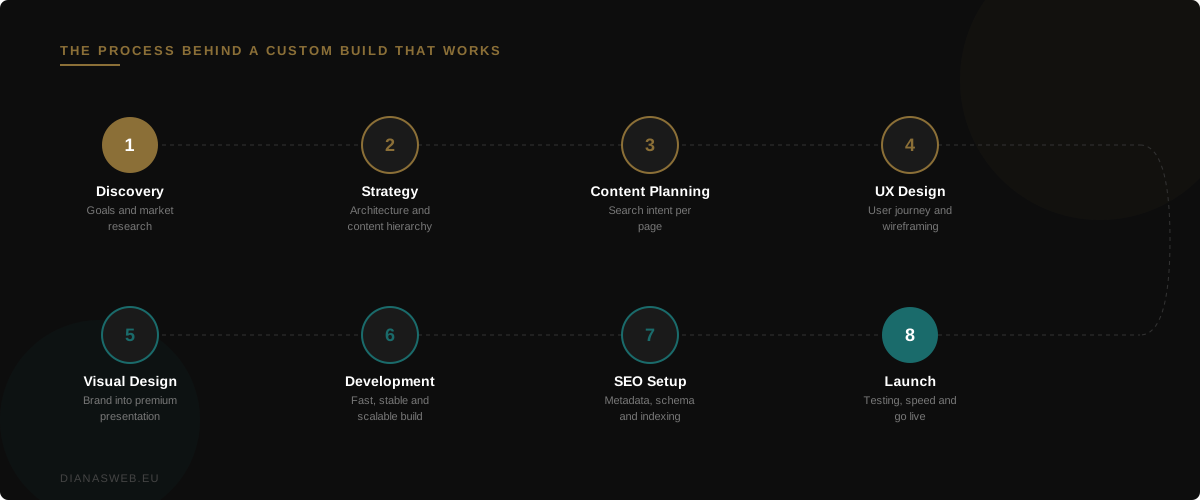
The best custom website projects are not rushed into design mockups. They follow a sequence where each phase solves a specific problem before the next one begins. When one of those phases is skipped, the weakness shows up later in rankings, in conversion rates, or in the cost of fixing problems that should have been addressed at the start.
- Discovery. Understanding the business goals, competitive landscape, target audience, and search opportunities before any creative or technical decisions are made.
- Strategy and architecture. Defining the page structure, content hierarchy, internal linking plan, and conversion paths that will support both SEO performance and user decision-making.
- Content planning. Mapping the content for each page against real search intent not what the business wants to say, but what the audience needs to hear and what search engines need to understand.
- UX and wireframing. Designing the user journey before applying visual design establishing how visitors move through the site and where decisions are made.
- Visual design. Translating the brand into a premium, credible presentation built on the strategic and structural foundation established in previous phases.
- Development. Building the site to be stable, fast, responsive, and scalable with clean code, optimised assets, and a technical setup that supports long-term performance.
- SEO implementation. Applying metadata, schema markup, internal links, and indexing setup so the site is ready to be found from the day it launches.
- Testing and launch. Verifying performance, mobile experience, browser compatibility, form functionality, and load speed before the site goes live.
Common Mistakes Small Businesses Make
Most underperforming small business websites share the same underlying problems. Recognising them early is what prevents expensive fixes later.- Starting with style before strategy. Choosing a template because it looks clean, then trying to fit services and SEO needs into it afterwards. That approach consistently produces weak page depth and generic messaging.
- Underestimating the role of content. A custom site cannot perform well if every service page says the same thing in slightly different words. Specific, structured, search-aware copy is as important as the design itself.
- Ignoring scalability at the build stage. A site may function well with three services, but what happens when there are ten, or when multiple locations need local SEO pages, or when booking systems and integrations become necessary?
- Treating mobile as secondary. For most small and local businesses, the majority of search traffic arrives on a phone. A site that underperforms on mobile is underperforming by default, regardless of how it looks on a desktop screen.
- Launching without SEO setup. Many businesses invest in design and development but go live without metadata, schema markup, proper indexing, or an internal linking structure. The site is live but invisible.